Filter by:
Clear All

Yad Vashem Publications



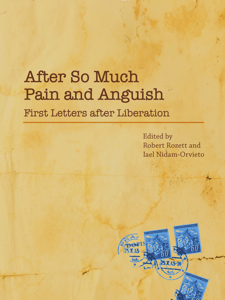




After so much Pain and Anguish: First Letters after Liberation
Editors: Robert Rozett, Iael Nidam-Orvieto
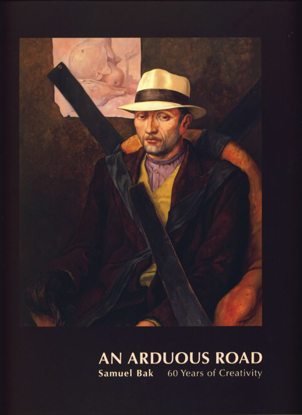
An Arduous Road: Samuel Bak - 60 Years of Creativity
Exhibition Curator and Editor: Yehudit Shendar

Art from the Holocaust: 100 Artworks from the Yad Vashem Collection
Editors: Eliad Moreh-Rosenberg, Walter Smerling

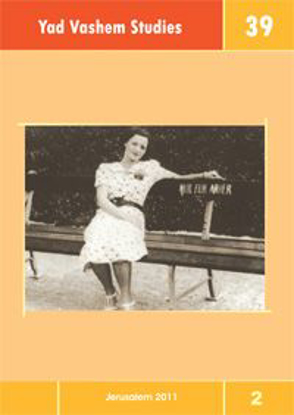
I will never forget what you did for me during the war in Yad Vashem Studies, Volume 39:2
Joanna B. Michlic

It Happened ON OUR PLANET
Moral Dilemmas among Jews in the Reality of the Holocaust
By Yitzhak Arad
It Happened on Our Planet offers a brutally honest insight into the horrifying decisions that the Jews had to make and the unbearable situations in which the Jews found themselves during this time. The publication of this important work presents generations to come with a better understanding of the complex reality of the Holocaust.
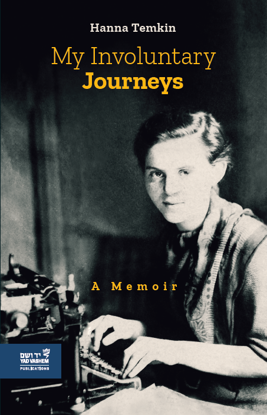
My Involuntary Journeys
Hanna Temkin
In My Involuntary Journeys, Hanna Temkin shares her story for the first time, shedding light on lesser-known aspects of Jewish life and survival in Eastern Europe before, during, and after the Holocaust. Moreover, Hanna’s story is an inspiring tale of female empowerment and serves as a testament to her ability to overcome the worst odds.
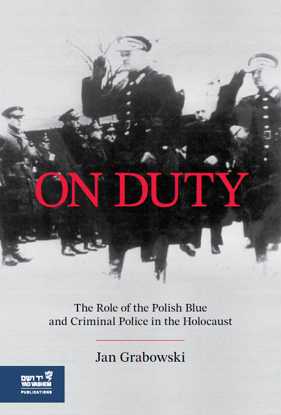
On Duty - The Polish Blue & Criminal Police in the Holocaust
On Duty - The Role of the Polish Blue and Criminal Police in the Holocaust
By Jan Grabowski
The Polish Police, commonly called the Blue or uniformed police in order to avoid using the term “Polish,” has played a most lamentable role in the extermination of the Jews of Poland. The uniformed police has been an enthusiastic executor of all German directives regarding the Jews.
Emanuel Ringelblum, Warsaw, 1943
Shortly after the occupation of Poland in the fall of 1939, the Germans created the Blue Police, consisting mainly of prewar Polish police officers. Within a short time, this police force was responsible for enforcing many anti-Jewish regulations issued by the Nazis. Who were these policemen, and how did they transform from ordinary policemen to murderous executioners? And what was the role of the Germans in this horrifying picture?
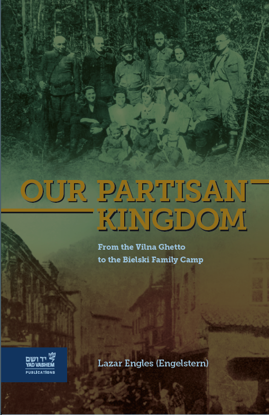
OUR PARTISAN KINGDOM - From the Vilna Ghetto to the Bielski Family Camp
Lazar Engles (Engelstern)
The moment we first set foot on the soil of the Naliboki Pushcha, the atmosphere was completely different. We felt a new kind of security, as if we were in our own partisan kingdom…. We had survived so many dangers, but we were now among Jews in the forest.
Prior to the German invasion of the Soviet Union, Lazar Engles (Engelstern) lived a peaceful and fulfilled life in his beloved city of Vilna with his wife and two daughters. The Nazi occupation of the city in June 1941 and its subsequent ghettoization marked a rapid escalation of horrors for Lazar and his family.

