
Filter by:
Clear AllYad Vashem Publications



![Picture of Yad Vashem Studies: Volume 51 [2]](https://store.yadvashem.org/images/thumbs/0002411_yad-vashem-studies-volume-51-2_415.png "Show details for Yad Vashem Studies: Volume 51 [2]")
Yad Vashem Studies: Volume 51 [2]
Editor: Dr. Sharon Kangisser Cohen
Table of Contents:
Introduction • Susanne Heim and Ulrich Herbert - A Comprehensive Documentation of the Holocaust: The Completion of the VEJ Project • Eliyahu Klein - Between Rescue and Persecution: Defining and Mapping the Range of Behaviors Toward Oppressed Jews During the Holocaust in the Countryside of Occupied Poland • Attila Gidó - Survivors of the Northern Transylvanian Deportations: Liberation, Repatriation, Reckoning • Gali Drucker Bar-Am - “Record and Lament”: Yizkor Books as History and Literature Conflated • Merav Yisrael and Gila Prebor - The Yizkor Book Collection in the Yad Vashem Library in Jerusalem: A Bibliographical Analysis
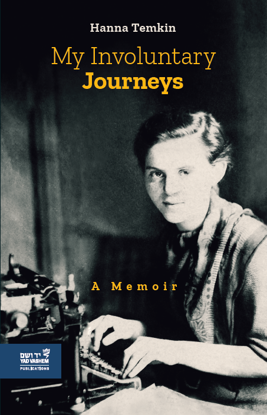
My Involuntary Journeys
Hanna Temkin
In My Involuntary Journeys, Hanna Temkin shares her story for the first time, shedding light on lesser-known aspects of Jewish life and survival in Eastern Europe before, during, and after the Holocaust. Moreover, Hanna’s story is an inspiring tale of female empowerment and serves as a testament to her ability to overcome the worst odds.
It Happened ON OUR PLANET
Moral Dilemmas among Jews in the Reality of the Holocaust
By Yitzhak Arad
It Happened on Our Planet offers a brutally honest insight into the horrifying decisions that the Jews had to make and the unbearable situations in which the Jews found themselves during this time. The publication of this important work presents generations to come with a better understanding of the complex reality of the Holocaust.
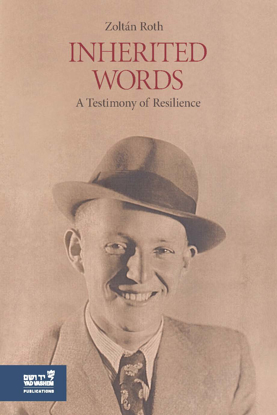
Inherited Words: A Testimony of Resilience
Zoltán Roth
There were many times when I felt an irresistible desire to stop, and those were moments that I had to really choose between fighting for life or not. My other option was to continue walking. It seems that struggling for the yet unlived part of my life was stronger. I didn’t stop.
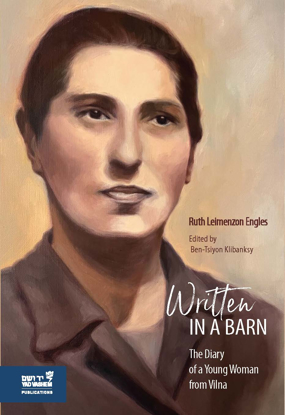
Written in a Barn: The Diary of a Young Woman from Vilna
Ruth Leimenzon Engles| Edited by Ben-Tsiyon Klibansky
At last, I have gotten a notebook in which to write. I have a pencil. I will try. Maybe it will make it easier to push through the days. It’s hard for me. As soon as dawn breaks, my first thought is: how does one endure until the end of the day.
Ruth Leimenzon Engles, May 15, 1944
A few days after the Germans occupied Vilna at the end of June 1941, Ruth Leimenzon’s husband was seized by local collaborators and was never seen again. Ruth, the sole survivor of her murdered family, managed to survive two years in the ghetto using her intelligence and common sense, helped by luck and perhaps miracles. Just two days before the ghetto’s liquidation in September 1943, Ruth escaped with the help of a Christian woman, her former boss’ wife, and found a hiding place in a barn on a farm 20 kilometers from Vilna, where she hid for nearly a year. During the last two months in the barn, Ruth wrote a diary in Yiddish describing her three-year ordeal.
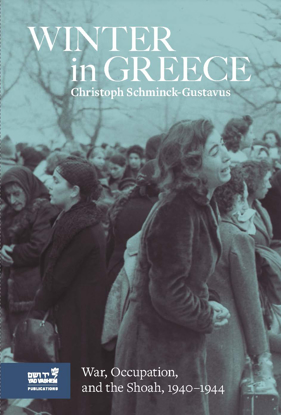
Winter In Greece: War, Occupation, and the Shoah, 1940–1944
Christoph Schminck-Gustavus