Filter by:
Clear AllYad Vashem Publications



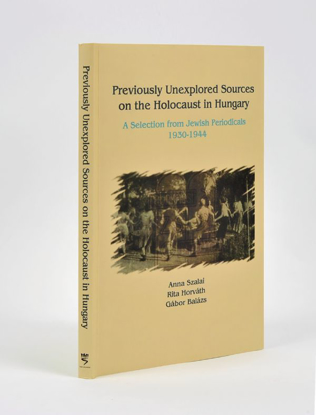
Previously Unexplored Sources on the Holocaust in Hungary: A Selection From Jewish Periodicals, 1930-1944
Anna Szalai, Rita Horváth, Gábor Balázs
I Have been a Stranger in a Strange Land: The Hungarian State and Jewish Refugees in Hungary, 1933-1945
Kinga Frojimovics
We Are Witnesses
Zvi Asaria-Hermann Helfgott
This is a unique account of the Holocaust and its aftermath by a Jewish Yugoslav army chaplain, based on his wartime diary. The author, PhD, rabbi and Army officer in World War II, spent four years in Germany among Yugoslavian Jewish officers who were prisoners of war. With distinct literary skill, he paints a broad scene of those days and delineates fine-tooled descriptions of the atmosphere engulfing the captive Jewish officers, Bergen-Belsen after the liberation and the dreams and struggles of the camp survivors.
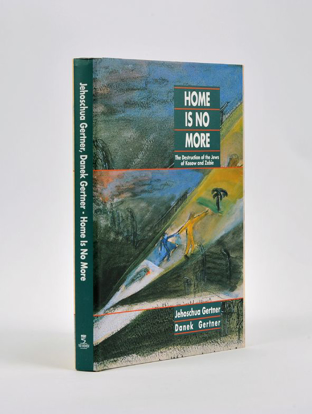
Home is No More: The Destruction of Kosow and Zabie
Danek Gertner and Jehoschua Gertner
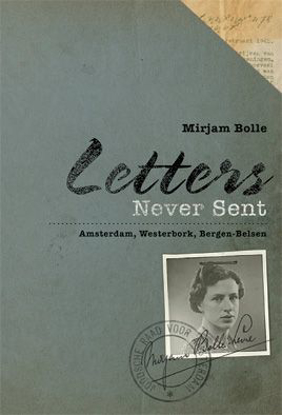
Letters Never Sent: Amsterdam, Westerbork, Bergen-Belsen
Mirjam Bolle
In early 1943, Mirjam Levie, a young Jewish woman from Amsterdam, began to write letters to her fiance, Leo Bolle, who had immigrated to Eretz Israel a few years earlier. Her letters, which were never sent, were written during the deportations of the Jews from Amsterdam; during her incarceration in Westerbork, the main transit camp for Jewish deportees to the death camps in Poland; and during her imprisonment in Bergen-Belsen. As secretary in the controversial “Jewish Council of Amsterdam”, Mirjam’s letters are the only source remaining to describe events from the viewpoint of one of its members. Mirjam managed to hide the letters she wrote in Amsterdam and Westerbork; and those she wrote in Bergen-Belsen she brought with her when she was released as part of an exchange between Dutch Jews and German POWs, and arrived in Eretz Israel on 10 July 1944. The book presents a series of letters – unique in their historical interest and extremely moving in their human dimension – forming a personal diary of real time.
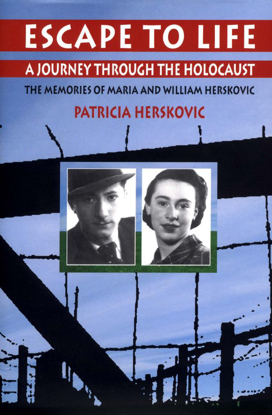
Escape to Life: A Journey Through the Holocaust - The Memories of Maria and William Herskovic
Patricia Herskovic

A Man of Courage in an Inhuman Time: Berthold Beitz in the Third Reich
Bernd Schmalhausen
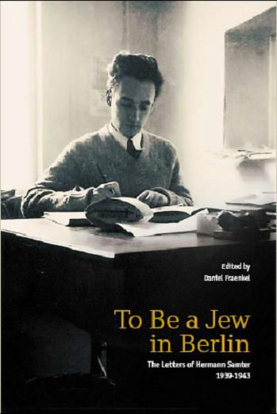
To be a Jew in Berlin: The Letters of Hermann Samter, 1939-1943
Edited by Daniel Fraenkel
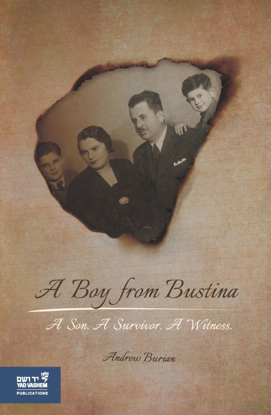
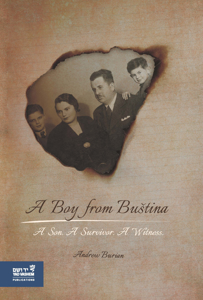
A Boy from Buština: A Son. A Survivor. A Witness.
Andrew Burian
A sheltered boy from the small town of Buština (then Czechoslovakia, now Ukraine), Andrew had a beautiful carefree childhood. At the age of thirteen, his world was shattered. Andrew’s wartime odyssey began with deportation from his hometown to Mateszalka ghetto in Hungary. From there, Andrew and his family were deported to Auschwitz-Birkenau, where he survived countless selections and near death experiences. In the freezing winter of 1945, he survived the infamous “death march” evacuation of Auschwitz-Birkenau and was loaded into a cattle car for the long journey to the Mauthausen concentration camp in Austria. Andrew survived another death-march to the Gunskirchen concentration camp from which he was ultimately liberated by the U.S. army. Andrew’s journey took him through Hungary, Poland, Austria, Czechoslovakia, England and, finally, the USA where he made a new life.
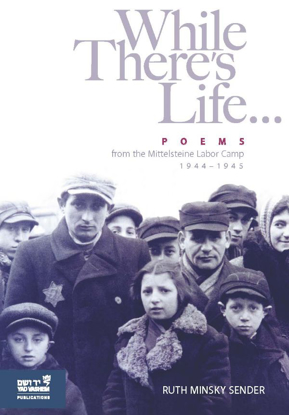
While There's Life…: Poems from the Mittelsteine Labor Camp 1944-1945
Ruth Minsky Sender
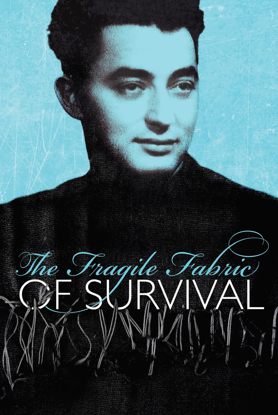
The Fragile Fabric of Survival: A Boy’s Account of Auschwitz
Tomáš Radil, Academic Editor: Bella Guterman
It is impossible to forget Auschwitz-Birkenau. It is useful to remember the basic ethical principles that allowed individuals to retain their humanity even in conditions that were barely human. Born in the Slovakian capital Bratislava, Tomáš Radil grew up in Párkány (Štúrovo), a small border town on the Danube that became part of Hungary in 1938. When the Wehrmacht occupied the country in mid-March 1944, the tide of war had long turned against Germany. Despite the precarious military situation on all fronts, the Nazis did not abandon their genocidal plans. Within eight weeks, hundreds of thousands of Hungarian Jews were deported to Auschwitz-Birkenau, where most of them were murdered immediately after arrival.
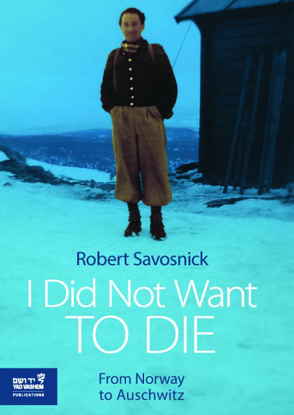
I Did Not Want to Die: From Norway to Auschwitz
Robert Savosnick | As told to Hans Melien
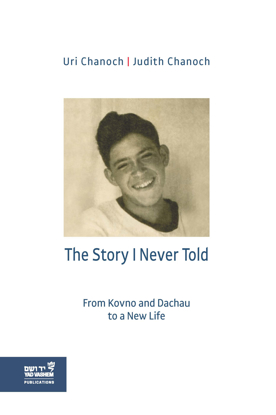
The Story I Never Told: From Kovno and Dachau to a New Life
Uri Chanoch | Judith Chanoch
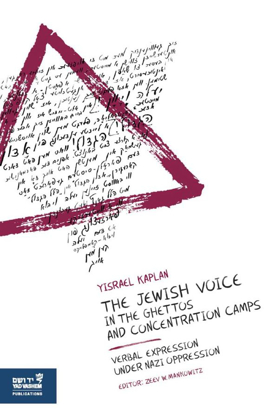
The Jewish Voice in the Ghettos and Concentration Camps: Verbal Expression under Nazi Oppression
Yisrael Kaplan | Editor: Zeev W. Mankowitz