
Filter by:
Clear AllYad Vashem Publications







Standing up to Evil: A Zionist’s Underground Rescue Activities in Hungary
Peretz Révész

The Cold Shower of a New Life: The Postwar Diaries of a Child Survivor, Volume 1 - July 23, 1945–February 17, 1946
Yehuda Bacon, Edited by Sharon Kangisser Cohen & Dorota Julia Nowak
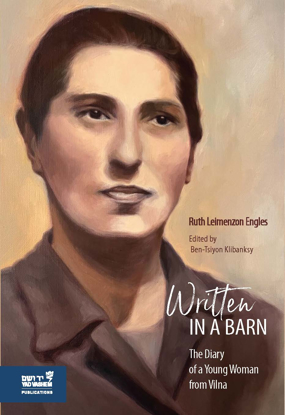
Written in a Barn: The Diary of a Young Woman from Vilna
Ruth Leimenzon Engles| Edited by Ben-Tsiyon Klibansky
At last, I have gotten a notebook in which to write. I have a pencil. I will try. Maybe it will make it easier to push through the days. It’s hard for me. As soon as dawn breaks, my first thought is: how does one endure until the end of the day.
Ruth Leimenzon Engles, May 15, 1944
A few days after the Germans occupied Vilna at the end of June 1941, Ruth Leimenzon’s husband was seized by local collaborators and was never seen again. Ruth, the sole survivor of her murdered family, managed to survive two years in the ghetto using her intelligence and common sense, helped by luck and perhaps miracles. Just two days before the ghetto’s liquidation in September 1943, Ruth escaped with the help of a Christian woman, her former boss’ wife, and found a hiding place in a barn on a farm 20 kilometers from Vilna, where she hid for nearly a year. During the last two months in the barn, Ruth wrote a diary in Yiddish describing her three-year ordeal.
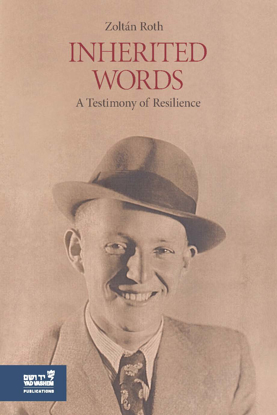
Inherited Words: A Testimony of Resilience
Zoltán Roth
There were many times when I felt an irresistible desire to stop, and those were moments that I had to really choose between fighting for life or not. My other option was to continue walking. It seems that struggling for the yet unlived part of my life was stronger. I didn’t stop.
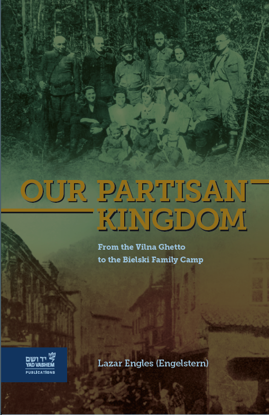
OUR PARTISAN KINGDOM - From the Vilna Ghetto to the Bielski Family Camp
Lazar Engles (Engelstern)
The moment we first set foot on the soil of the Naliboki Pushcha, the atmosphere was completely different. We felt a new kind of security, as if we were in our own partisan kingdom…. We had survived so many dangers, but we were now among Jews in the forest.
Prior to the German invasion of the Soviet Union, Lazar Engles (Engelstern) lived a peaceful and fulfilled life in his beloved city of Vilna with his wife and two daughters. The Nazi occupation of the city in June 1941 and its subsequent ghettoization marked a rapid escalation of horrors for Lazar and his family.
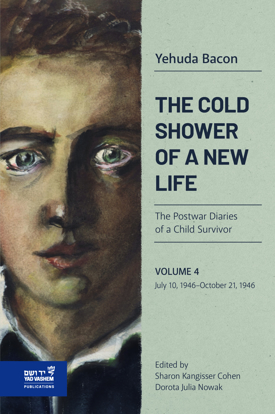
The Cold Shower of a New Life: The Postwar Diaries of a Child Survivor, Volume 4 - July 10, 1946–October 21, 1946
Yehuda Bacon, Edited by Sharon Kangisser Cohen and Dorota Julia Nowak
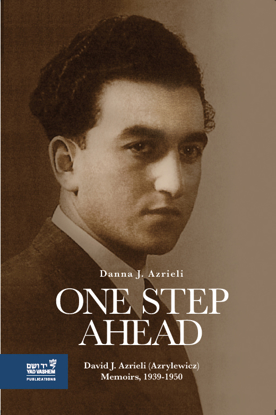
One Step Ahead: David J. Azrieli (Azrylewicz): Memoirs, 1939–1950
Danna J. Azrieli
Upon arriving at the kibbutz, after years of running and living in a constant state of fear and anxiety, I finally felt that I could unburden my heart and mind. I had dreamed of the day I would arrive, alive, in Eretz Israel. The constant stress of the last few years was made easier by my constant desire to achieve that goal. So, when I first arrived in the kibbutz dining hall, it was as if all my dreams had come true.
David J. Azrieli was born in 1922 in Maków Mazowiecki, Poland. Written by his daughter Danna, this gripping account of survival during World War II describes David’s extraordinary travels, always just one step ahead of life-threatening danger, which took him to the Soviet-occupied zones of Poland and later to Ukraine, Tashkent, and Buchara. He subsequently served in the Anders Army, before making his way from Baghdad to the frontiers of British-occupied Palestine.
The memoir chronicles David J. Azrieli’s arrival in Palestine, his studies at the Technion in Haifa, his experiences as a soldier in the War of Independence, and his realization that most of his immediate family had perished in the Holocaust. Azrieli finally settled in Canada in 1954. There he married his wife, Stephanie, and together they raised four children—Rafi, Sharon, Naomi, and Danna. This story of survival is all the more remarkable given Azrieli’s later achievements as a successful real estate developer and philanthropist. One of the economic giants of the Jewish world, his many developments changed the face of Israel and stand as a striking testament to the strength and courage of a boy whom Hitler could not defeat. The highlight of his activities is the establishment of the Canadian and Israeli Azrieli Foundations, which focus on improving the lives of present and future generations through education, research, healthcare, and arts.
Diary from the Kovno Ghetto: August 1942-January 1943
Ilya Gerber, Edited by Lea Prais
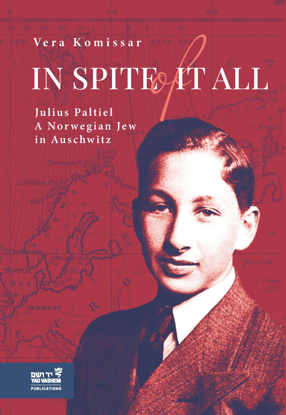
IN SPITE OF IT ALL: Julius Paltiel - A Norwegian Jew in Auschwitz
Vera Komissar
A child’s cry pierces the stillness. The wail breaks the dismal silence that fell when the doors were locked. It’s as if the child’s tears give us all permission to let out our despair. Julius Paltiel grew up in Trondheim, Norway, where he lived with his mother and his brother. Like all the Jews of Norway, their lives changed forever when the Nazis came to power in April 1940. His arrest at the age of eighteen in 1942 marked the beginning of a journey of inconceivable horror and brutality in the Nazi concentration camps. Initially incarcerated in Falstad, a Nazi concentration camp in his native Norway, Julius Paltiel was then deported to Germany by sea in February 1943 before boarding a train to Auschwitz. He was selected for forced labor to work for IG Farben in Auschwitz III–Monowitz. In January 1945, he was sent on a death march to Buchenwald where he was liberated by U.S. forces on April 11, 1945. Julius Paltiel is one of the few Norwegian Jews who survived and returned from Auschwitz and one of the Jewish survivors who testified in the war crime trials against the Nazi perpetrators in Norway. He dedicated his life to the fight against antisemitism to ensure that such horrors would never happen again. As one of only a handful of Holocaust testimonies from Norway, In Spite of It All sheds light on Julius Paltiel’s personal ordeal to survive the Holocaust as well as on the Jewish persecution and murder of Norway’s Jewish community. This tale of survival also serves as a warning of the atrocities that are possible at the hands of ordinary human beings.
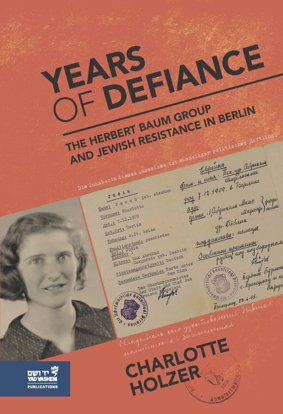
Years of Defiance: The Herbert Baum Group and Jewish Resistance in Berlin
Charlotte Holzer
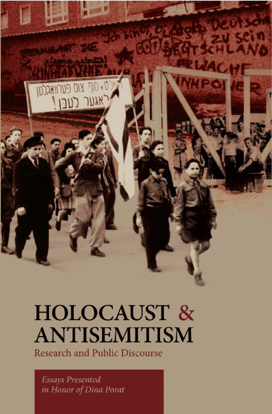
Holocaust and Antisemitism: Research and Public Discourse - Essays Presented in Honor of Dina Porat
Editors: Roni Stauber, Aviva Halamish, Esther Webman
