Filter by:
Clear AllYad Vashem Publications



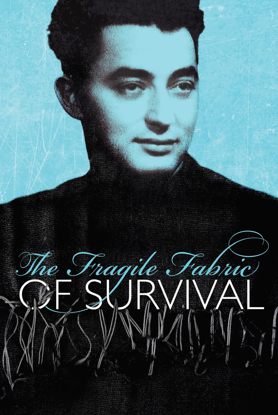
The Fragile Fabric of Survival: A Boy’s Account of Auschwitz
Tomáš Radil, Academic Editor: Bella Guterman
It is impossible to forget Auschwitz-Birkenau. It is useful to remember the basic ethical principles that allowed individuals to retain their humanity even in conditions that were barely human. Born in the Slovakian capital Bratislava, Tomáš Radil grew up in Párkány (Štúrovo), a small border town on the Danube that became part of Hungary in 1938. When the Wehrmacht occupied the country in mid-March 1944, the tide of war had long turned against Germany. Despite the precarious military situation on all fronts, the Nazis did not abandon their genocidal plans. Within eight weeks, hundreds of thousands of Hungarian Jews were deported to Auschwitz-Birkenau, where most of them were murdered immediately after arrival.
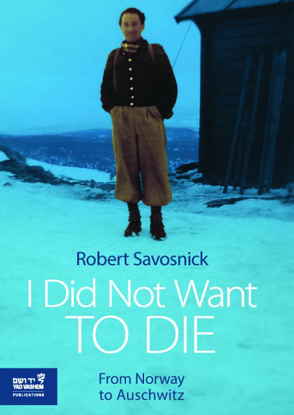
I Did Not Want to Die: From Norway to Auschwitz
Robert Savosnick | As told to Hans Melien
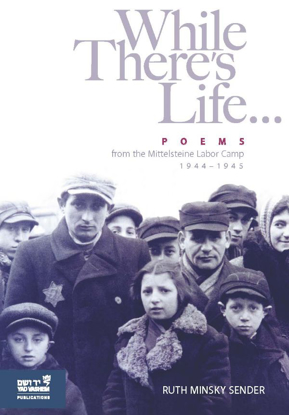
While There's Life…: Poems from the Mittelsteine Labor Camp 1944-1945
Ruth Minsky Sender
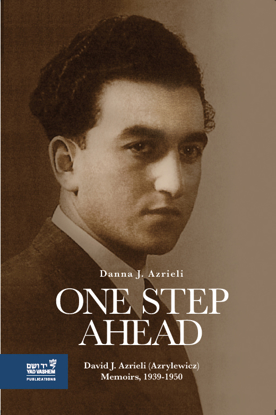
One Step Ahead: David J. Azrieli (Azrylewicz): Memoirs, 1939–1950
Danna J. Azrieli
Upon arriving at the kibbutz, after years of running and living in a constant state of fear and anxiety, I finally felt that I could unburden my heart and mind. I had dreamed of the day I would arrive, alive, in Eretz Israel. The constant stress of the last few years was made easier by my constant desire to achieve that goal. So, when I first arrived in the kibbutz dining hall, it was as if all my dreams had come true.
David J. Azrieli was born in 1922 in Maków Mazowiecki, Poland. Written by his daughter Danna, this gripping account of survival during World War II describes David’s extraordinary travels, always just one step ahead of life-threatening danger, which took him to the Soviet-occupied zones of Poland and later to Ukraine, Tashkent, and Buchara. He subsequently served in the Anders Army, before making his way from Baghdad to the frontiers of British-occupied Palestine.
The memoir chronicles David J. Azrieli’s arrival in Palestine, his studies at the Technion in Haifa, his experiences as a soldier in the War of Independence, and his realization that most of his immediate family had perished in the Holocaust. Azrieli finally settled in Canada in 1954. There he married his wife, Stephanie, and together they raised four children—Rafi, Sharon, Naomi, and Danna. This story of survival is all the more remarkable given Azrieli’s later achievements as a successful real estate developer and philanthropist. One of the economic giants of the Jewish world, his many developments changed the face of Israel and stand as a striking testament to the strength and courage of a boy whom Hitler could not defeat. The highlight of his activities is the establishment of the Canadian and Israeli Azrieli Foundations, which focus on improving the lives of present and future generations through education, research, healthcare, and arts.
The Cold Shower of a New Life: The Postwar Diaries of a Child Survivor, Volume 3 - April 23, 1946−July 10, 1946
Yehuda Bacon, Edited by Sharon Kangisser Cohen and Dorota Julia Nowak
Diary from the Kovno Ghetto: August 1942-January 1943
Ilya Gerber, Edited by Lea Prais
The Cold Shower of a New Life: The Postwar Diaries of a Child Survivor, Volume 2 – February 20, 1946–April 23, 1946
Yehuda Bacon, Edited by Sharon Kangisser Cohen and Dorota Julia Nowak

Standing up to Evil: A Zionist’s Underground Rescue Activities in Hungary
Peretz Révész

The Cold Shower of a New Life: The Postwar Diaries of a Child Survivor, Volume 1 - July 23, 1945–February 17, 1946
Yehuda Bacon, Edited by Sharon Kangisser Cohen & Dorota Julia Nowak
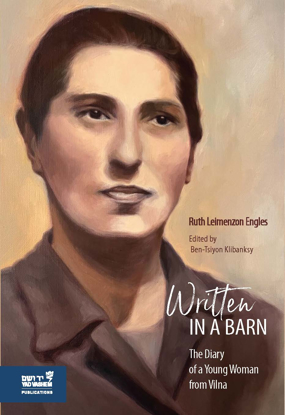
Written in a Barn: The Diary of a Young Woman from Vilna
Ruth Leimenzon Engles| Edited by Ben-Tsiyon Klibansky
At last, I have gotten a notebook in which to write. I have a pencil. I will try. Maybe it will make it easier to push through the days. It’s hard for me. As soon as dawn breaks, my first thought is: how does one endure until the end of the day.
Ruth Leimenzon Engles, May 15, 1944
A few days after the Germans occupied Vilna at the end of June 1941, Ruth Leimenzon’s husband was seized by local collaborators and was never seen again. Ruth, the sole survivor of her murdered family, managed to survive two years in the ghetto using her intelligence and common sense, helped by luck and perhaps miracles. Just two days before the ghetto’s liquidation in September 1943, Ruth escaped with the help of a Christian woman, her former boss’ wife, and found a hiding place in a barn on a farm 20 kilometers from Vilna, where she hid for nearly a year. During the last two months in the barn, Ruth wrote a diary in Yiddish describing her three-year ordeal.
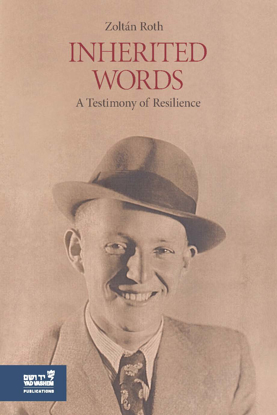
Inherited Words: A Testimony of Resilience
Zoltán Roth
There were many times when I felt an irresistible desire to stop, and those were moments that I had to really choose between fighting for life or not. My other option was to continue walking. It seems that struggling for the yet unlived part of my life was stronger. I didn’t stop.
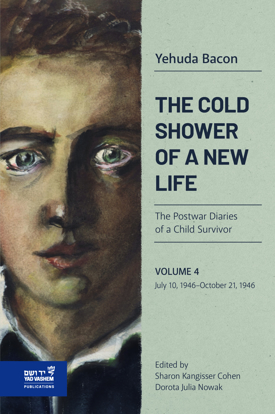
The Cold Shower of a New Life: The Postwar Diaries of a Child Survivor, Volume 4 - July 10, 1946–October 21, 1946
Yehuda Bacon, Edited by Sharon Kangisser Cohen and Dorota Julia Nowak