
Filter by:
Clear AllYad Vashem Publications





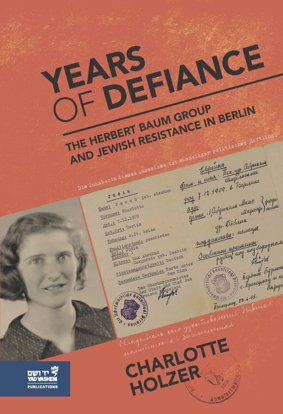
Years of Defiance: The Herbert Baum Group and Jewish Resistance in Berlin
Charlotte Holzer
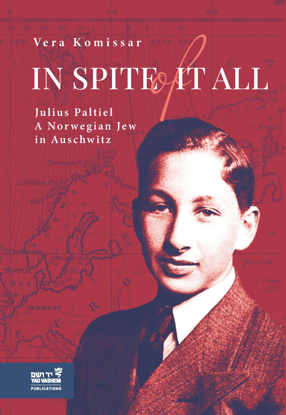
IN SPITE OF IT ALL: Julius Paltiel - A Norwegian Jew in Auschwitz
Vera Komissar
A child’s cry pierces the stillness. The wail breaks the dismal silence that fell when the doors were locked. It’s as if the child’s tears give us all permission to let out our despair. Julius Paltiel grew up in Trondheim, Norway, where he lived with his mother and his brother. Like all the Jews of Norway, their lives changed forever when the Nazis came to power in April 1940. His arrest at the age of eighteen in 1942 marked the beginning of a journey of inconceivable horror and brutality in the Nazi concentration camps. Initially incarcerated in Falstad, a Nazi concentration camp in his native Norway, Julius Paltiel was then deported to Germany by sea in February 1943 before boarding a train to Auschwitz. He was selected for forced labor to work for IG Farben in Auschwitz III–Monowitz. In January 1945, he was sent on a death march to Buchenwald where he was liberated by U.S. forces on April 11, 1945. Julius Paltiel is one of the few Norwegian Jews who survived and returned from Auschwitz and one of the Jewish survivors who testified in the war crime trials against the Nazi perpetrators in Norway. He dedicated his life to the fight against antisemitism to ensure that such horrors would never happen again. As one of only a handful of Holocaust testimonies from Norway, In Spite of It All sheds light on Julius Paltiel’s personal ordeal to survive the Holocaust as well as on the Jewish persecution and murder of Norway’s Jewish community. This tale of survival also serves as a warning of the atrocities that are possible at the hands of ordinary human beings.
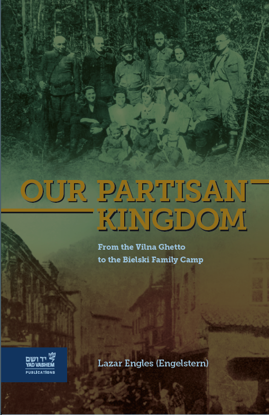
OUR PARTISAN KINGDOM - From the Vilna Ghetto to the Bielski Family Camp
Lazar Engles (Engelstern)
The moment we first set foot on the soil of the Naliboki Pushcha, the atmosphere was completely different. We felt a new kind of security, as if we were in our own partisan kingdom…. We had survived so many dangers, but we were now among Jews in the forest.
Prior to the German invasion of the Soviet Union, Lazar Engles (Engelstern) lived a peaceful and fulfilled life in his beloved city of Vilna with his wife and two daughters. The Nazi occupation of the city in June 1941 and its subsequent ghettoization marked a rapid escalation of horrors for Lazar and his family.
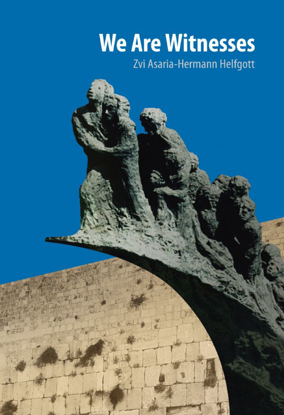
We Are Witnesses
Zvi Asaria-Hermann Helfgott
This is a unique account of the Holocaust and its aftermath by a Jewish Yugoslav army chaplain, based on his wartime diary. The author, PhD, rabbi and Army officer in World War II, spent four years in Germany among Yugoslavian Jewish officers who were prisoners of war. With distinct literary skill, he paints a broad scene of those days and delineates fine-tooled descriptions of the atmosphere engulfing the captive Jewish officers, Bergen-Belsen after the liberation and the dreams and struggles of the camp survivors.
Previously Unexplored Sources on the Holocaust in Hungary: A Selection From Jewish Periodicals, 1930-1944
Anna Szalai, Rita Horváth, Gábor Balázs

I Have been a Stranger in a Strange Land: The Hungarian State and Jewish Refugees in Hungary, 1933-1945
Kinga Frojimovics
Holocaust and Antisemitism: Research and Public Discourse - Essays Presented in Honor of Dina Porat
Editors: Roni Stauber, Aviva Halamish, Esther Webman

White Coats in the Ghetto: Jewish Medicine in Poland during the Holocaust
Miriam Offer
A last few words to honor you, the Jewish doctors. What canI tell you, my beloved colleagues and companions in misery? You are a part of all of us. Slavery, hunger, deportation, thosedeath figures in our ghetto were also your legacy. And you byyour work could give the henchman the answer Non omnis moriar, I shall not wholly die. (Dr. Israel Milejkowski, Director, Judenrat Health Department in the Warsaw Ghetto, October 1942)
White Coats in the Ghetto narrates the struggle of the Jews to survive in the Warsaw ghetto while also preserving their humanity during the Holocaust. Based on a vast quantity of official and personal documents, it describes the elaborate medical system that the Jews established in the ghetto to cope with the lethal conditions imposed on them by the Nazis, and the tragic ethical dilemmas that the medical teams confronted under German occupation.