Filter by:
Clear AllYad Vashem Publications



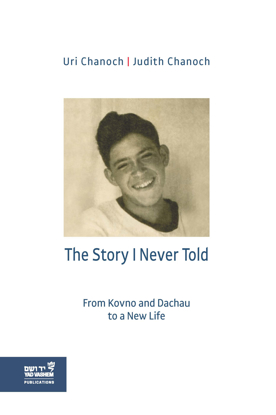
The Story I Never Told: From Kovno and Dachau to a New Life
Uri Chanoch | Judith Chanoch
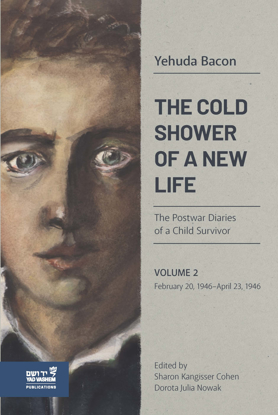
The Cold Shower of a New Life: The Postwar Diaries of a Child Survivor, Volume 2 – February 20, 1946–April 23, 1946
Yehuda Bacon, Edited by Sharon Kangisser Cohen and Dorota Julia Nowak
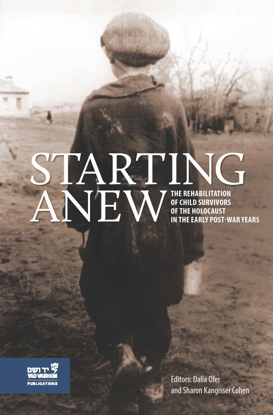
Starting Anew: The Rehabilitation of Child Survivors of the Holocaust in the Early Postwar Years
Edited by Sharon Kangisser Cohen and Dalia Ofer

White Coats in the Ghetto: Jewish Medicine in Poland during the Holocaust
Miriam Offer
A last few words to honor you, the Jewish doctors. What canI tell you, my beloved colleagues and companions in misery? You are a part of all of us. Slavery, hunger, deportation, thosedeath figures in our ghetto were also your legacy. And you byyour work could give the henchman the answer Non omnis moriar, I shall not wholly die. (Dr. Israel Milejkowski, Director, Judenrat Health Department in the Warsaw Ghetto, October 1942)
White Coats in the Ghetto narrates the struggle of the Jews to survive in the Warsaw ghetto while also preserving their humanity during the Holocaust. Based on a vast quantity of official and personal documents, it describes the elaborate medical system that the Jews established in the ghetto to cope with the lethal conditions imposed on them by the Nazis, and the tragic ethical dilemmas that the medical teams confronted under German occupation.

Path of Hope
Menachem Katz relates his escape from the mowing down of the last Jews of Brzezany at the cemetery in 1943 through his experiences hiding in a bunker with seven other people. He describes life in hiding in detail as well as the relathionship with a family of Poles who assisted them in survival, and relates the severe difficulties of daily existence in the closed and crowded spaces. alongsode some moments of humor. Katz succeeded in locating members of the Polish family that saved him, and they were honored as Righteous Among the Nations.

The Jewish Underground Press in Warsaw: Volume Two – February–June 1941
Hebrew Edition Editor: Joseph Kermish (1907-2005), English Edition Editor: Tikva Fatal-Knaani
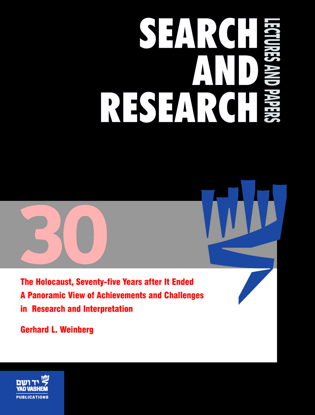
Search and Research: Lectures and Papers 30: The Holocaust, Seventy-Five Years After It Ended – A Panoramic View of Achievements and Challenges in Research and Interpretation
Gerhard L. Weinberg | Series Editor: Dan Michman
![תמונה של Yad Vashem Studies: Volume 47 [2]](https://store.yadvashem.org/images/thumbs/0002035_yad-vashem-studies-volume-47-2_415.jpeg "Yad Vashem Studies: Volume 47 [2]")

Standing up to Evil: A Zionist’s Underground Rescue Activities in Hungary
Peretz Révész
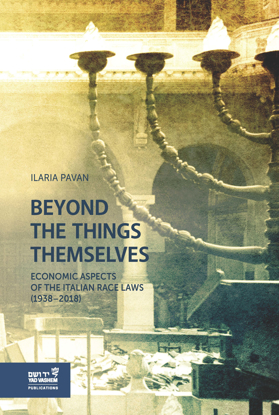
Beyond the Things Themselves: Economic Aspects of the Italian Race Laws (1938-2018)
by Ilaria Pavan
![תמונה של Yad Vashem Studies: Volume 47 [1]](https://store.yadvashem.org/images/thumbs/0002004_yad-vashem-studies-volume-47-1_415.jpeg "Yad Vashem Studies: Volume 47 [1]")

The Cold Shower of a New Life: The Postwar Diaries of a Child Survivor, Volume 1 - July 23, 1945–February 17, 1946
Yehuda Bacon, Edited by Sharon Kangisser Cohen & Dorota Julia Nowak
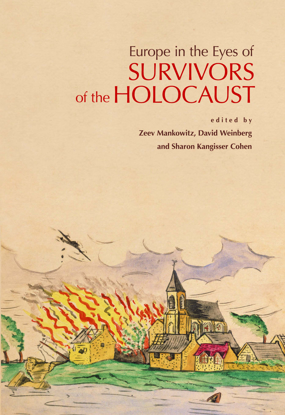
Europe in the Eyes of Survivors of the Holocaust
Editors: Zeev Mankowitz, David Weinberg, Sharon Kangisser Cohen
In what sense was the European heritage responsible for Jewish cultural and intellectual development? How could one describe the events of the Holocaust? Was there a future for Jews in a reconstructed Europe? A group of scholars suggests a more nuanced view by examining the perspectives of ten survivors – philosophers, activists, and memoirists – whose attitudes towards the European past were characterized by conflicting feelings of alienation and attraction.

Art from the Holocaust: 100 Artworks from the Yad Vashem Collection
Editors: Eliad Moreh-Rosenberg, Walter Smerling
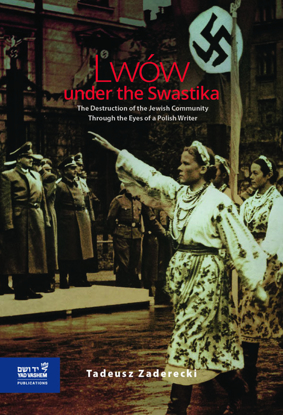
Lwów under the Swastika: The Destruction of the Jewish Community Through the Eyes of a Polish Writer
Tadeusz Zaderecki
Three Endings and a Beginning: Shimon Redlich’s Galicia in Yad Vashem Studies, Volume XXXIV
Timothy Snyder
Listening to Holocaust Survivors in Postwar Europe in Yad Vashem Studies, Volume 40:2
Simone Gigliotti