Filter by:
Clear AllResearch Studies

A Man of Courage in an Inhuman Time: Berthold Beitz in the Third Reich
Bernd Schmalhausen
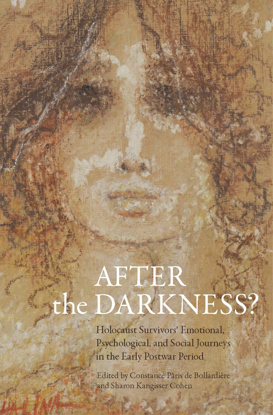
After the Darkness?
Holocaust Survivors’ Emotional, Psychological, and Social Journeys in the Early Postwar Period
Editors: Constance Pâris de Bollardière and Sharon Kangisser Cohen
His reaction to my cautious questions about his parents, his brothers and sisters, his experiences in the concentration camp was characteristic. His only response was to let his head drop onto his chest. He remained sitting in this posture in silence for some time. It must be said here without pathos or literary embellishment that it is only now that he has been returned to normal life that this child feels the pain and torment of everything he has seen and experienced.
Hans Keilson
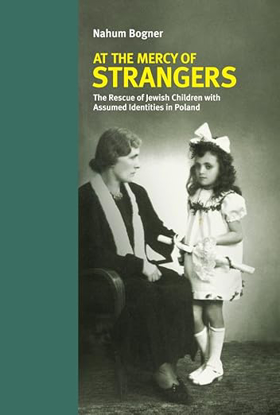
At the Mercy of Strangers: The Rescue of Hidden Jewish Children with Assumed Identities in Poland
Nachum Bogner

Beyond the Things Themselves: Economic Aspects of the Italian Race Laws (1938-2018)
Ilaria Pavan
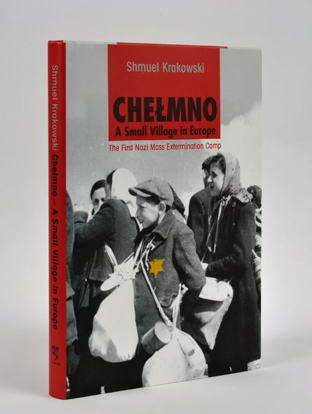
Chelmno: A Small Village in Europe - The First Nazi Mass Extermination Camp
Shmuel Krakowski
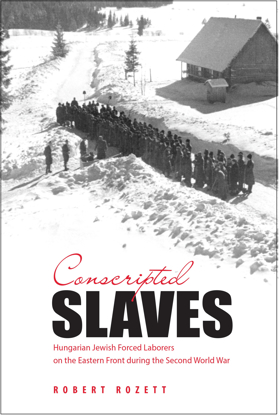
Conscripted Slaves: Hungarian Jewish Forced Laborers on the Eastern Front during the Second World War
Robert Rozett


Distrust, Animosity, and Solidarity: Jews and Non-Jews during the Holocaust in the USSR
Edited by Christoph Dieckmann and Arkadi Zeltser
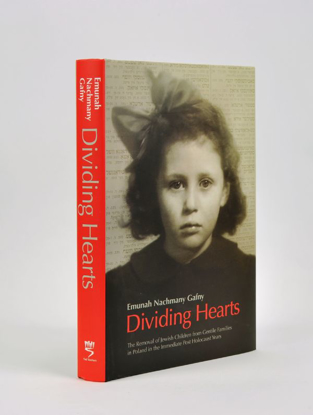
Dividing Hearts: The Removal of Jewish Children from Gentile Families in Poland in the Immediate Post Holocaust Years
Emunah Nachmany Gafny
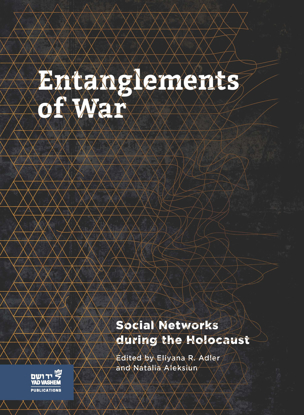
Entanglements of War: Social Networks during the Holocaust
Edited by: Eliyana R. Adler and Natalia Aleksiun
The Nazi persecution and murder of the Jews of Europe led to the atomization of the social relationships of the victims. Families were ripped apart. Entire communities were ghettoized and isolated from the outside world. The forced removal of the Jews from the midst of the non-Jewish population facilitated the crimes committed against them, significantly limited the assistance they could rely on, and restricted the number of witnesses to their persecution and murder. However, despite the devastation, disruption, and loss brought by the Holocaust, prewar patterns and lationships continued to shape decisions and actions by Jews and non-Jews both during and after the war. Even in extremis, they often relied on established networks of support that had been forged in very different circumstances. Jewish victims as well as bystanders and perpetrators relied on the already familiar cohort of relatives, neighbors, peers, and colleagues to support and assist them during this time. Just as these networks brought people with various backgrounds together, Entanglements of War compiles a broad range of interdisciplinary perspectives to reveal invaluable findings about the relationships, choices, and actions that shaped these complex connections, and their impact on Jewish lives during the Holocaust and its immediate aftermath.
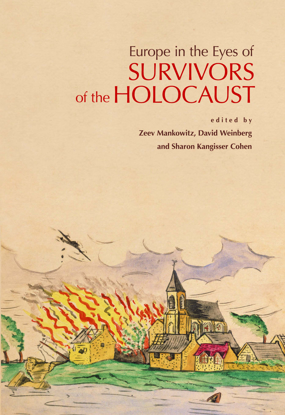
Europe in the Eyes of Survivors of the Holocaust
Editors: Zeev Mankowitz, David Weinberg, Sharon Kangisser Cohen
In what sense was the European heritage responsible for Jewish cultural and intellectual development? How could one describe the events of the Holocaust? Was there a future for Jews in a reconstructed Europe? A group of scholars suggests a more nuanced view by examining the perspectives of ten survivors – philosophers, activists, and memoirists – whose attitudes towards the European past were characterized by conflicting feelings of alienation and attraction.

Expulsion and Extermination: Holocaust Testimonials from Provincial Lithuania
David Bankier

Hiding, Sheltering and Borrowing Identities: Avenues of Rescue During the Holocaust
Edited by Dan Michman
During the immediate aftermath of the Holocaust, the focus of research was directed at the actions of the murderers and at resistance. That situation changed gradually during the 1960s and 1970s. The rescue of Jews, a major aspect of Holocaust history, started to attract the attention of scholars. Still, the focus was mostly on governments and organizations. The initiation of Yad Vashem’s recognition program for the Righteous Among the Nations also drew public attention to the acts of individual rescuers in areas under Nazi control. Over the course of the last three decades, important studies have been published that investigated the rescuers and their acts. Yet even today, many aspects of the rescue activities require further research. Moreover, the aspect of Jewish initiatives and individual experiences deserves more attention. Yad Vashem’s eighteenth biannual conference, titled “Hiding, Sheltering and Borrowing Identities as Avenues of Rescue during the Holocaust,” brought together a large number of international scholars to discuss new approaches and the current state of research on the topic. This volume, based on a selection of papers that were presented at the conference, aims to provide an overview of the multi-faceted landscape of academic studies on the rescuers and the rescued.
Holocaust and Antisemitism: Research and Public Discourse - Essays Presented in Honor of Dina Porat
Editors: Roni Stauber, Aviva Halamish, Esther Webman
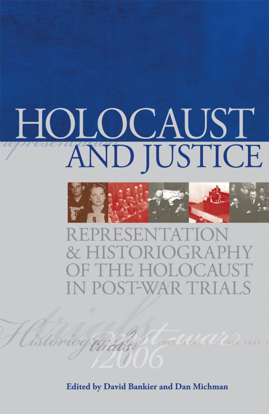
Holocaust and Justice: Representation and Historiography of the Holocaust in Post-War Trials
Editors: David Bankier and Dan Michman
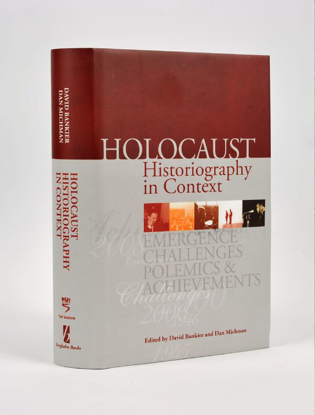
Holocaust Historiography in Context: Emergence, Challenges, Polemics and Achievements
Edited by David Bankier and Dan Michman
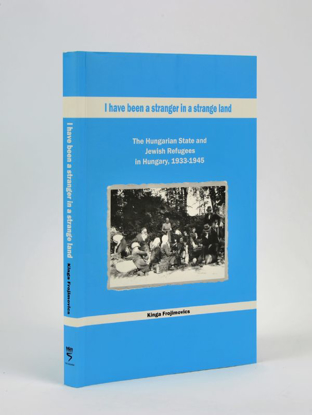
I Have been a Stranger in a Strange Land: The Hungarian State and Jewish Refugees in Hungary, 1933-1945
Kinga Frojimovics
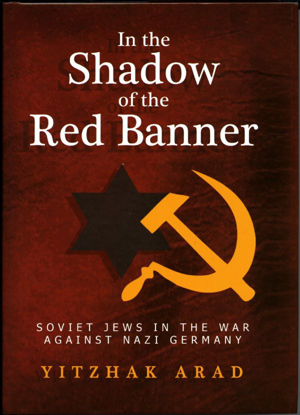
In The Shadow of the Red Banner: Soviet Jews In the War Against Nazi Germany
Yitzhak Arad
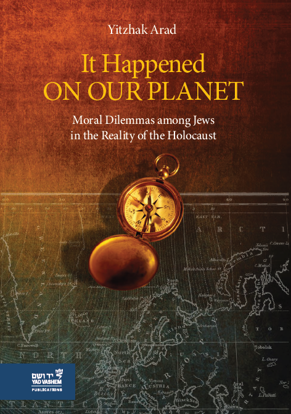
It Happened ON OUR PLANET
Moral Dilemmas among Jews in the Reality of the Holocaust
By Yitzhak Arad
It Happened on Our Planet offers a brutally honest insight into the horrifying decisions that the Jews had to make and the unbearable situations in which the Jews found themselves during this time. The publication of this important work presents generations to come with a better understanding of the complex reality of the Holocaust.
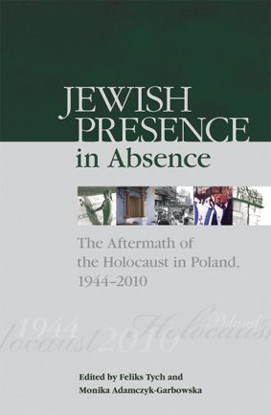
Jewish Presence in Absence: The Aftermath of the Holocaust in Poland, 1944–2010
Editors: Feliks Tych and Monika Adamczyk-Garbowska
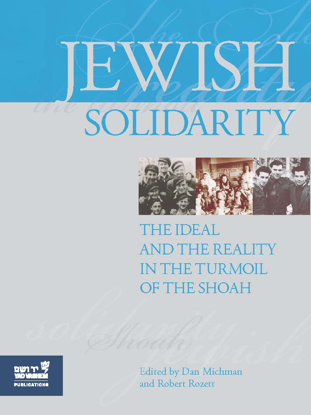
Jewish Solidarity: The Ideal and the Reality in the Turmoil of the Shoah
Edited by Dan Michman and Robert Rozett
The Holocaust unquestionably shattered most normative frameworks and cast the struggle for survival in its starkest form. Yet despite this, the Holocaust did not necessarily lead Jews to act as lone wolves, caring only about their own survival. This volume demonstrates that Jewish solidarity during the Holocaust is a multifaceted, multilayered issue, replete with complexities and shadings that reflect the diversity of Jewishness and Jewish existence, as well as the unprecedented dire situations that challenged it, and while solidarity was not a given and may not have predominated, it did not cease to exist.
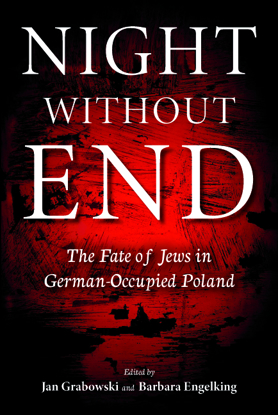
Night Without End: The Fate of Jews in German-Occupied Poland
Edited by Jan Grabowski and Barbara Engelking
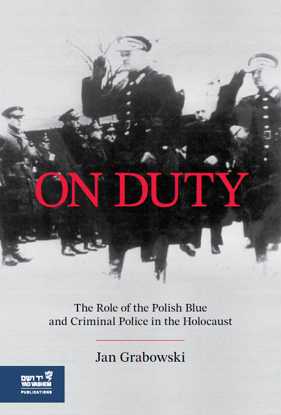
On Duty - The Polish Blue & Criminal Police in the Holocaust
On Duty - The Role of the Polish Blue and Criminal Police in the Holocaust
By Jan Grabowski
The Polish Police, commonly called the Blue or uniformed police in order to avoid using the term “Polish,” has played a most lamentable role in the extermination of the Jews of Poland. The uniformed police has been an enthusiastic executor of all German directives regarding the Jews.
Emanuel Ringelblum, Warsaw, 1943
Shortly after the occupation of Poland in the fall of 1939, the Germans created the Blue Police, consisting mainly of prewar Polish police officers. Within a short time, this police force was responsible for enforcing many anti-Jewish regulations issued by the Nazis. Who were these policemen, and how did they transform from ordinary policemen to murderous executioners? And what was the role of the Germans in this horrifying picture?
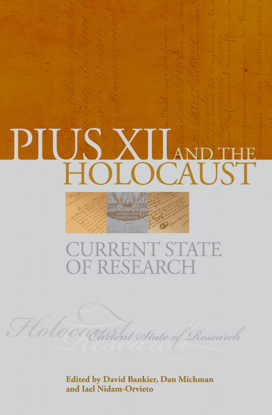
Pius XII and the Holocaust: Current State of Research
Editors: David Bankier, Dan Michman, Iael Nidam-Orvieto
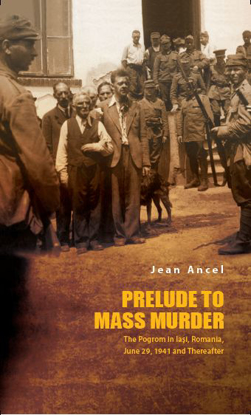
Prelude to Mass Murder: The Pogrom in Iaşi, Romania, June 29, 1941 and Thereafter
Jean Ancel
- 1
- 2