Filter by:
Clear All
Yad Vashem Publications




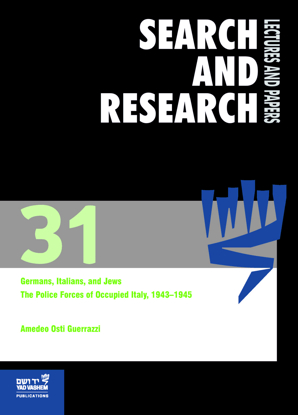
Search & Research, Lectures and Papers 31: Germans, Italians, And Jews – The Police Forces Of Occupied Italy, 1943–1945
Amedeo Osti Guerrazzi
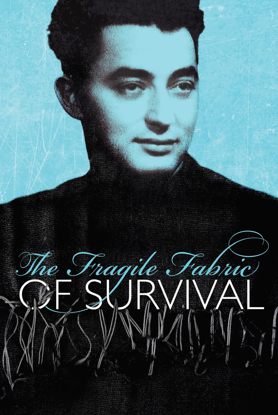
The Fragile Fabric of Survival: A Boy’s Account of Auschwitz
Tomáš Radil, Academic Editor: Bella Guterman
It is impossible to forget Auschwitz-Birkenau. It is useful to remember the basic ethical principles that allowed individuals to retain their humanity even in conditions that were barely human. Born in the Slovakian capital Bratislava, Tomáš Radil grew up in Párkány (Štúrovo), a small border town on the Danube that became part of Hungary in 1938. When the Wehrmacht occupied the country in mid-March 1944, the tide of war had long turned against Germany. Despite the precarious military situation on all fronts, the Nazis did not abandon their genocidal plans. Within eight weeks, hundreds of thousands of Hungarian Jews were deported to Auschwitz-Birkenau, where most of them were murdered immediately after arrival.
![תמונה של Yad Vashem Studies: Volume 48 [1+2]](https://store.yadvashem.org/images/thumbs/0002080_yad-vashem-studies-volume-48-12_415.jpeg "Yad Vashem Studies: Volume 48 [1+2]")
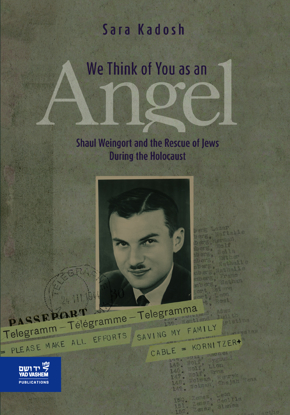
We Think of you as an Angel: Shaul Weingort and the Rescue of Jews During the Holocaust
Sara Kadosh
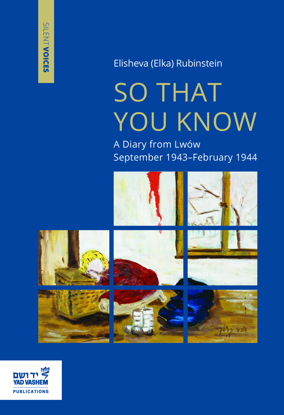
So that You Know: A Diary from Lwów September 1943–February 1944
Elisheva (Elka) Rubinstein
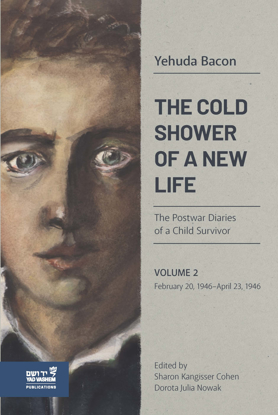
The Cold Shower of a New Life: The Postwar Diaries of a Child Survivor, Volume 2 – February 20, 1946–April 23, 1946
Yehuda Bacon, Edited by Sharon Kangisser Cohen and Dorota Julia Nowak
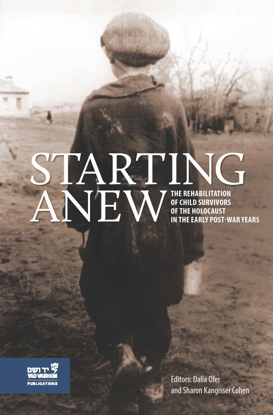
Starting Anew: The Rehabilitation of Child Survivors of the Holocaust in the Early Postwar Years
Edited by Sharon Kangisser Cohen and Dalia Ofer

White Coats in the Ghetto: Jewish Medicine in Poland during the Holocaust
Miriam Offer
A last few words to honor you, the Jewish doctors. What canI tell you, my beloved colleagues and companions in misery? You are a part of all of us. Slavery, hunger, deportation, thosedeath figures in our ghetto were also your legacy. And you byyour work could give the henchman the answer Non omnis moriar, I shall not wholly die. (Dr. Israel Milejkowski, Director, Judenrat Health Department in the Warsaw Ghetto, October 1942)
White Coats in the Ghetto narrates the struggle of the Jews to survive in the Warsaw ghetto while also preserving their humanity during the Holocaust. Based on a vast quantity of official and personal documents, it describes the elaborate medical system that the Jews established in the ghetto to cope with the lethal conditions imposed on them by the Nazis, and the tragic ethical dilemmas that the medical teams confronted under German occupation.

Path of Hope
Menachem Katz relates his escape from the mowing down of the last Jews of Brzezany at the cemetery in 1943 through his experiences hiding in a bunker with seven other people. He describes life in hiding in detail as well as the relathionship with a family of Poles who assisted them in survival, and relates the severe difficulties of daily existence in the closed and crowded spaces. alongsode some moments of humor. Katz succeeded in locating members of the Polish family that saved him, and they were honored as Righteous Among the Nations.

The Jewish Underground Press in Warsaw: Volume Two – February–June 1941
Hebrew Edition Editor: Joseph Kermish (1907-2005), English Edition Editor: Tikva Fatal-Knaani