Filter by:
Clear All
Yad Vashem Publications

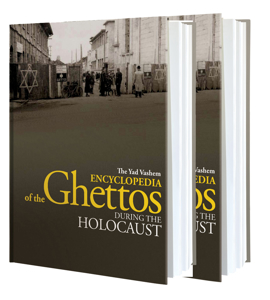
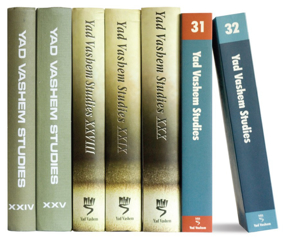

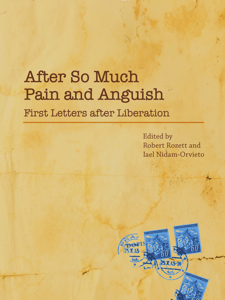

Search and Research No. 40 - The Vrba–Wetzler Report And The Failure to Warn The Hungarian Jews (1944) - A Reassessment
Paul Sanders
Search and Research: Lectures and Papers 38: Yugoslavia and the Eichmann Trial
Jovana Cvetićanin
The Holocaust in Hungary, 5: "Bereft of Council - The Jewish Leadership in Hungary during the Holocaust,1944–1945"
László Bernát Veszprémy
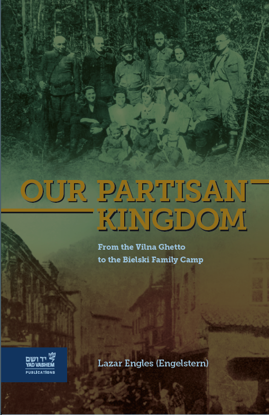
OUR PARTISAN KINGDOM - From the Vilna Ghetto to the Bielski Family Camp
Lazar Engles (Engelstern)
The moment we first set foot on the soil of the Naliboki Pushcha, the atmosphere was completely different. We felt a new kind of security, as if we were in our own partisan kingdom…. We had survived so many dangers, but we were now among Jews in the forest.
Prior to the German invasion of the Soviet Union, Lazar Engles (Engelstern) lived a peaceful and fulfilled life in his beloved city of Vilna with his wife and two daughters. The Nazi occupation of the city in June 1941 and its subsequent ghettoization marked a rapid escalation of horrors for Lazar and his family.
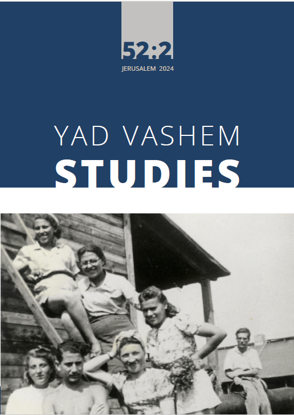
![תמונה של Yad Vashem Studies: Volume 52 [1]](https://store.yadvashem.org/images/thumbs/0002495_yad-vashem-studies-volume-52-1_415.jpeg "Yad Vashem Studies: Volume 52 [1]")
Yad Vashem Studies: Volume 52 [1]
Editor: Dr. Sharon Kangisser Cohen
Table of Contents:
Introduction
Dan Stone - Lawrence L. Langer (1929–2024): In Memoriam
Barbara Engelking - “I Can’t Write”: Requests for Assistance Addressed to the Jewish National Committee in Warsaw, 1943–1944
Fábio Koifman and Rui Afonso - The Legality of the Visas Issued by the Brazilian Consulate in Hamburg, 1938–1939
Kenneth H. Marcus, Marlou Schrover, and Simon Erlanger - Remembering World War II Concentration Camps: Dutch Memorials and Transitional Justice
Efrat Buchris Giuseppe Verdi’s Requiem in Theresienstadt: Music of Succor
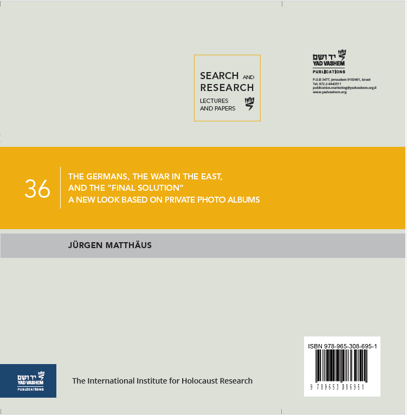
Search and Research: Lectures and Papers 36: The Germans, The War in The East, and The “Final Solution”
In the historiography of World War II and the Holocaust, letters and diaries are often used to provide insight into the perspectives of the time. In this volume, Jürgen Matthäus uses the often-neglected source of photo albums created by German soldiers during and immediately after the war. These albums provide a rare insight into the mindset of ordinary Germans, their knowledge of the crimes committed, and how their perspectives changed during the war.
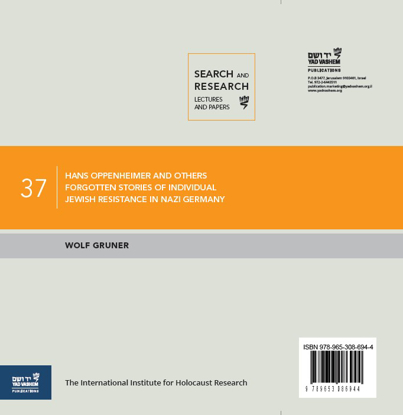
Search and Research: Lectures and Papers 37: Hans Oppenheimer and Others: Forgotten Stories of Individual Jewish Resistance in Nazi Germany
Hans Oppenheimer and Others
Forgotten Stories of individual Jewish Resistance in Nazi Germany
Wolf Gruner
Through the stories of Hans Oppenheimer and others, this research reassesses Jewish resistance in Nazi Germany and emphasizes that courage existed in all elements of the Jewish population. Jewish men and women acted against the Nazis and their policies, regardless of age, social status, education, profession, religious belief, and political conviction. Wolf Gruner asserts that by applying a broader lens regarding resistance in Nazi-occupied Europe, we will be able to tell a richer story of Jewish agency and responses during the Holocaust and bury the wrong assumption of Jewish passivity during the Holocaust once and for all.
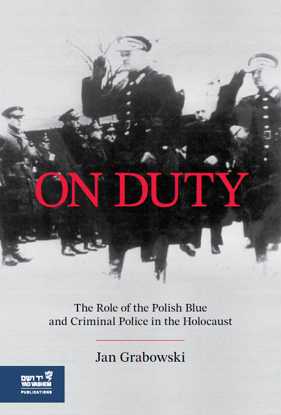
On Duty - The Polish Blue & Criminal Police in the Holocaust
On Duty - The Role of the Polish Blue and Criminal Police in the Holocaust
By Jan Grabowski
The Polish Police, commonly called the Blue or uniformed police in order to avoid using the term “Polish,” has played a most lamentable role in the extermination of the Jews of Poland. The uniformed police has been an enthusiastic executor of all German directives regarding the Jews.
Emanuel Ringelblum, Warsaw, 1943
Shortly after the occupation of Poland in the fall of 1939, the Germans created the Blue Police, consisting mainly of prewar Polish police officers. Within a short time, this police force was responsible for enforcing many anti-Jewish regulations issued by the Nazis. Who were these policemen, and how did they transform from ordinary policemen to murderous executioners? And what was the role of the Germans in this horrifying picture?
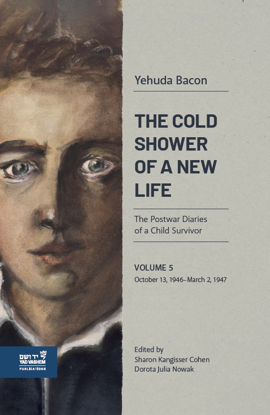
The Cold Shower of a New Life: The Postwar Diaries of a Child Survivor, Volume 5 - October 13, 1946–March 2, 1947
Author: Yehuda Bacon
Editors: Sharon Kangisser Cohen and Dorota Julia Nowak
What a life it will be, Jerusalem! I know very well what the wordmeans. Like every association, it spans my entire life. Notebook 8, August 12, 1946; World-renowned Israeli artist and Holocaust survivor Yehuda Bacon began to keep a diary in July 1945, while living in a youth home in Štiřín, Czechoslovakia, shortly after his liberation. During the past seven decades, Bacon has filled over 240 notebooks. His diary is a mosaic of words and drawings through which he attempts to express his past, contemplate his present, and imagine his future.