Filter by:
Clear AllYad Vashem Publications



![Picture of Yad Vashem Studies: Volume 50 [1]](https://store.yadvashem.org/images/thumbs/0002221_yad-vashem-studies-volume-50-1_415.jpeg "Show details for Yad Vashem Studies: Volume 50 [1]")
![Picture of Yad Vashem Studies: Volume 51 [1]](https://store.yadvashem.org/images/thumbs/0002275_yad-vashem-studies-volume-51-1_415.jpeg "Show details for Yad Vashem Studies: Volume 51 [1]")
Yad Vashem Studies: Volume 51 [1]
Edited by Sharon Kangisser Cohen
Table of Contents: • Introduction • Michael Robert Marrus (1941-2022)—In Memoriam (Doris Bergen) • The Polish Underground State and the Financing of Help for the Jews: An Attempt at a New Approach (Dariusz Libionka) • News from Auschwitz: The International Underground’s Secret Reports and the Jewish Holocaust (Tom Navon) • Bandera, Genocide, and Justice: Was Stepan Bandera Responsible for Crimes Committed by the OUN and the UPA? (Grzegorz Rossoliński-Liebe) • Politics of Holocaust Memory in Communist and Post-Communist Romania: On Survivor Matei Gall’s Multiple Life Stories (Ștefan Cristian Ionescu and Dana Mihăilescu)
![Picture of Yad Vashem Studies: Volume 49 [2]](https://store.yadvashem.org/images/thumbs/0002184_yad-vashem-studies-volume-49-2_415.jpeg "Show details for Yad Vashem Studies: Volume 49 [2]")
![Picture of Yad Vashem Studies: Volume 49 [1]](https://store.yadvashem.org/images/thumbs/0002160_yad-vashem-studies-volume-49-1_415.jpeg "Show details for Yad Vashem Studies: Volume 49 [1]")
![Picture of Yad Vashem Studies: Volume 48 [1+2]](https://store.yadvashem.org/images/thumbs/0002080_yad-vashem-studies-volume-48-12_415.jpeg "Show details for Yad Vashem Studies: Volume 48 [1+2]")

Path of Hope
Menachem Katz relates his escape from the mowing down of the last Jews of Brzezany at the cemetery in 1943 through his experiences hiding in a bunker with seven other people. He describes life in hiding in detail as well as the relathionship with a family of Poles who assisted them in survival, and relates the severe difficulties of daily existence in the closed and crowded spaces. alongsode some moments of humor. Katz succeeded in locating members of the Polish family that saved him, and they were honored as Righteous Among the Nations.
![Picture of Yad Vashem Studies: Volume 46 [2]](https://store.yadvashem.org/images/thumbs/0001287_yad-vashem-studies-volume-46-2_415.jpeg "Show details for Yad Vashem Studies: Volume 46 [2]")

In Those Terrible Days: Notes from the Lodz Ghetto
Josef Zelkowicz | Edited by Michal Unger
![Picture of Yad Vashem Studies: Volume 46 [1]](https://store.yadvashem.org/images/thumbs/0001270_yad-vashem-studies-volume-46-1_415.jpeg "Show details for Yad Vashem Studies: Volume 46 [1]")
![Picture of Yad Vashem Studies: Volume 47 [1]](https://store.yadvashem.org/images/thumbs/0002004_yad-vashem-studies-volume-47-1_415.jpeg "Show details for Yad Vashem Studies: Volume 47 [1]")
![Picture of Yad Vashem Studies: Volume 47 [2]](https://store.yadvashem.org/images/thumbs/0002035_yad-vashem-studies-volume-47-2_415.jpeg "Show details for Yad Vashem Studies: Volume 47 [2]")
The Holocaust: History and Memory - Essays Presented in Honor of Israel Gutman
Edited by Shmuel Almog, David Bankier, Daniel Blatman, Dalia Ofer
The Holocaust: The Unique and the Universal - Essays Presented in Honor of Yehuda Bauer
Editors: Shmuel Almog, David Bankier, Daniel Blatman, Dalia Ofer
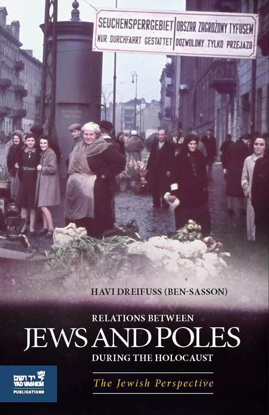
Relations Between Jews and Poles during the Holocaust: The Jewish Perspective
Havi Dreifuss (Ben-Sasson)
"As far as Polish‒Jewish relations are concerned, we need to devote at least a few words to the attitude of Jews toward the Poles.… even in their suffering, the Jews remember with deep emotion and gratefulness all the acts of kindness toward them and the helping hand extended to them by each of those Poles.… But, despite this, the insult and humiliation—which shall never be forgotten—no one wishes to remember."
(Anonymous, Warsaw Ghetto, 1942)
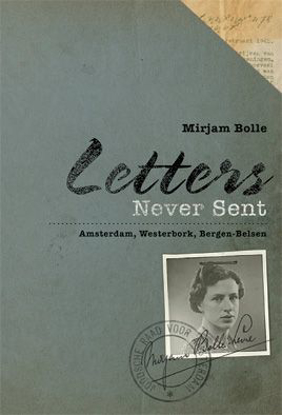
Letters Never Sent: Amsterdam, Westerbork, Bergen-Belsen
Mirjam Bolle
In early 1943, Mirjam Levie, a young Jewish woman from Amsterdam, began to write letters to her fiance, Leo Bolle, who had immigrated to Eretz Israel a few years earlier. Her letters, which were never sent, were written during the deportations of the Jews from Amsterdam; during her incarceration in Westerbork, the main transit camp for Jewish deportees to the death camps in Poland; and during her imprisonment in Bergen-Belsen. As secretary in the controversial “Jewish Council of Amsterdam”, Mirjam’s letters are the only source remaining to describe events from the viewpoint of one of its members. Mirjam managed to hide the letters she wrote in Amsterdam and Westerbork; and those she wrote in Bergen-Belsen she brought with her when she was released as part of an exchange between Dutch Jews and German POWs, and arrived in Eretz Israel on 10 July 1944. The book presents a series of letters – unique in their historical interest and extremely moving in their human dimension – forming a personal diary of real time.
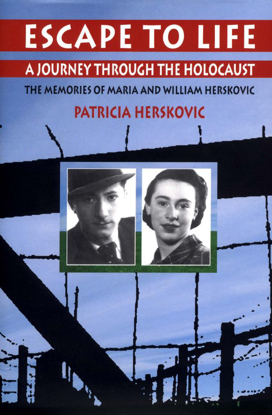
Escape to Life: A Journey Through the Holocaust - The Memories of Maria and William Herskovic
Patricia Herskovic

A Man of Courage in an Inhuman Time: Berthold Beitz in the Third Reich
Bernd Schmalhausen
Home is No More: The Destruction of Kosow and Zabie
Danek Gertner and Jehoschua Gertner
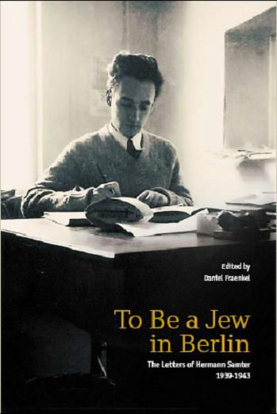
To be a Jew in Berlin: The Letters of Hermann Samter, 1939-1943
Edited by Daniel Fraenkel
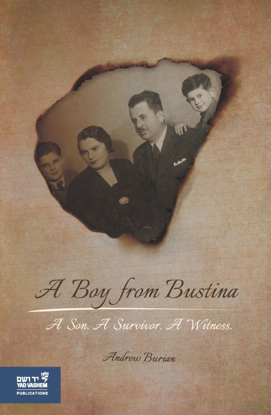
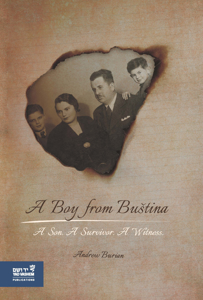
A Boy from Buština: A Son. A Survivor. A Witness.
Andrew Burian
A sheltered boy from the small town of Buština (then Czechoslovakia, now Ukraine), Andrew had a beautiful carefree childhood. At the age of thirteen, his world was shattered. Andrew’s wartime odyssey began with deportation from his hometown to Mateszalka ghetto in Hungary. From there, Andrew and his family were deported to Auschwitz-Birkenau, where he survived countless selections and near death experiences. In the freezing winter of 1945, he survived the infamous “death march” evacuation of Auschwitz-Birkenau and was loaded into a cattle car for the long journey to the Mauthausen concentration camp in Austria. Andrew survived another death-march to the Gunskirchen concentration camp from which he was ultimately liberated by the U.S. army. Andrew’s journey took him through Hungary, Poland, Austria, Czechoslovakia, England and, finally, the USA where he made a new life.
The Jewish Voice in the Ghettos and Concentration Camps: Verbal Expression under Nazi Oppression
Yisrael Kaplan | Editor: Zeev W. Mankowitz
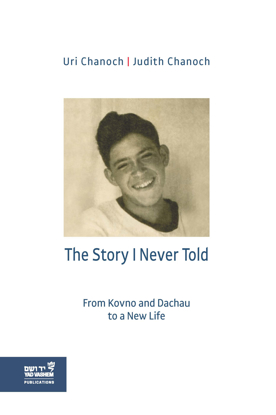
The Story I Never Told: From Kovno and Dachau to a New Life
Uri Chanoch | Judith Chanoch
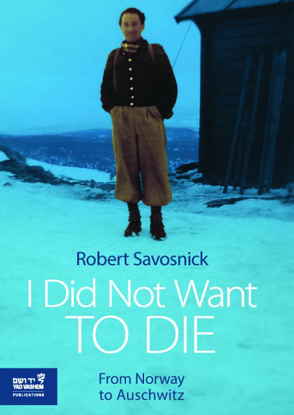
I Did Not Want to Die: From Norway to Auschwitz
Robert Savosnick | As told to Hans Melien