Filter by:
Clear AllYad Vashem Publications




Distrust, Animosity, and Solidarity: Jews and Non-Jews during the Holocaust in the USSR
Edited by Christoph Dieckmann and Arkadi Zeltser
![תמונה של Yad Vashem Studies: Volume 49 [2]](https://store.yadvashem.org/images/thumbs/0002184_yad-vashem-studies-volume-49-2_415.jpeg "Yad Vashem Studies: Volume 49 [2]")

Search & Research, Lectures and Papers 32: Beyond Popular Opinion: Interpretive History In The Context of The Holocaust
Christian Ingrao
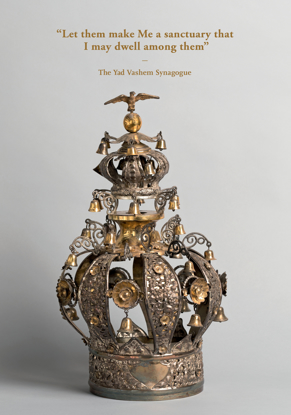
"Let them make Me a sanctuary that I may dwell among them”: The Yad Vashem Synagogue
Curator: Haviva Peled-Carmeli, Deputy Curators: Michael Tal, Sara Shor
The Yad Vashem Synagogue catalogue - The artifacts displayed in the Yad Vashem Synagogue are a few of the thousands of items preserved in Yad Vashem's collections that tell the story of the Jewish people – a panoramic mosaic of memories depicting the fate of individuals, families and communities during the Holocaust. The artifacts in our collections tell stories interwoven with flashes of fear, despair and loss, but also moments of determination, pity, hope, courage and love. These stories evoke empathy with the fate of the victims, and place the Jewish individual at the heart of the narrative that unfolds in the Holocaust History Museum. The significance of these artifacts is hoin ned by their integration the vast, complex fabric that shapes collective memory from countless fragments of personal recollection. The display area and the space currently used as the Synagogue combine to depict the lost Jewish life in the face of its continuity today. These artifacts bear mute testimony to the history and legacy of individuals and communities during the Holocaust that we seek to commemorate and to impart to future generations.
The Cold Shower of a New Life: The Postwar Diaries of a Child Survivor, Volume 3 - April 23, 1946−July 10, 1946
Yehuda Bacon, Edited by Sharon Kangisser Cohen and Dorota Julia Nowak
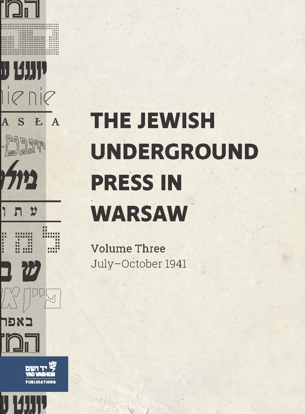
The Jewish Underground Press in Warsaw: Volume Three - July–October 1941
Editor: Tikva Fatal-Knaani | Hebrew edition editor: Joseph Kermish
![תמונה של Yad Vashem Studies: Volume 49 [1]](https://store.yadvashem.org/images/thumbs/0002160_yad-vashem-studies-volume-49-1_415.jpeg "Yad Vashem Studies: Volume 49 [1]")
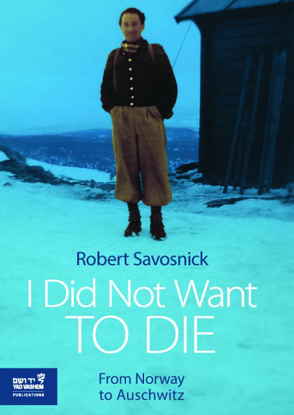
I Did Not Want to Die: From Norway to Auschwitz
Robert Savosnick | As told to Hans Melien
The Persecution and Murder of the European Jews by Nazi Germany, 1933–1945, Volume 3: German Reich and Protectorate of Bohemia and Moravia September 1939–September 1941
Executive Editor: Andrea Löw; Edited by: Susanne Heim, Ulrich Herbert,Hans-Dieter Kreikamp, Horst Möller,Gertrud Pickhan, Dieter Pohl, Hartmut Weber and Andreas Wirsching; English edition also edited by: Michael Hollmann, Sybille Steinbacher,and Simone Walther-von Jena;
The Persecution and Murder of the European Jews by Nazi Germany, 1933–1945, Volume 2: German Reich 1938–August 1939
Executive Editor: Susanne Heim; Edited by: Götz Aly, Ulrich Herbert, Hans-Dieter Kreikamp, Horst Möller, Dieter Pohl, and Hartmut Weber; English edition also edited by: Michael Hollmann, Sybille Steinbacher, Simone Walther-von Jena, and Andreas Wirsching;
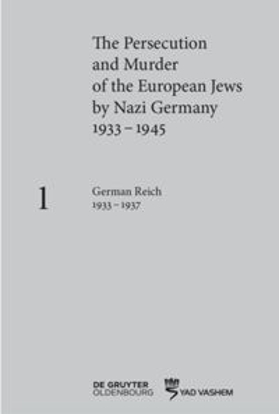
The Persecution and Murder of the European Jews by Nazi Germany, 1933–1945, Volume 1: German Reich 1933–1937
Executive Editor: Wolf Gruner; Edited by: Götz Aly, Wolf Gruner, Susanne Heim, Ulrich Herbert,Hans-Dieter Kreikamp, Horst Möller,Dieter Pohl, and Hartmut Weber; English edition also edited by: Michael Hollmann, Sybille Steinbacher,Simone Walther-von Jena, and Andreas Wirsching;
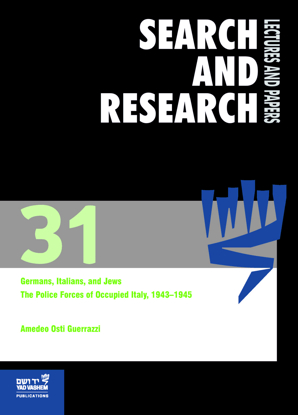
Search & Research, Lectures and Papers 31: Germans, Italians, And Jews – The Police Forces Of Occupied Italy, 1943–1945
Amedeo Osti Guerrazzi
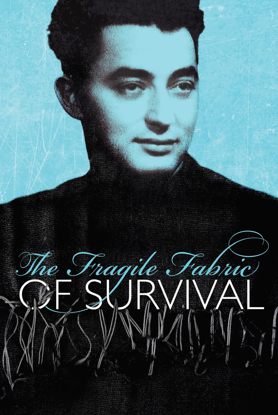
The Fragile Fabric of Survival: A Boy’s Account of Auschwitz
Tomáš Radil, Academic Editor: Bella Guterman
It is impossible to forget Auschwitz-Birkenau. It is useful to remember the basic ethical principles that allowed individuals to retain their humanity even in conditions that were barely human. Born in the Slovakian capital Bratislava, Tomáš Radil grew up in Párkány (Štúrovo), a small border town on the Danube that became part of Hungary in 1938. When the Wehrmacht occupied the country in mid-March 1944, the tide of war had long turned against Germany. Despite the precarious military situation on all fronts, the Nazis did not abandon their genocidal plans. Within eight weeks, hundreds of thousands of Hungarian Jews were deported to Auschwitz-Birkenau, where most of them were murdered immediately after arrival.
![תמונה של Yad Vashem Studies: Volume 48 [1+2]](https://store.yadvashem.org/images/thumbs/0002080_yad-vashem-studies-volume-48-12_415.jpeg "Yad Vashem Studies: Volume 48 [1+2]")
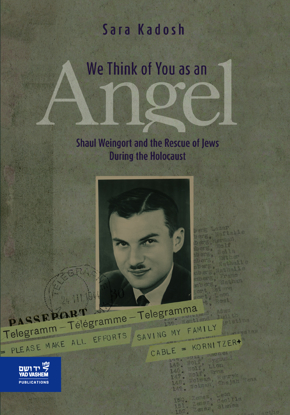
We Think of you as an Angel: Shaul Weingort and the Rescue of Jews During the Holocaust
Sara Kadosh
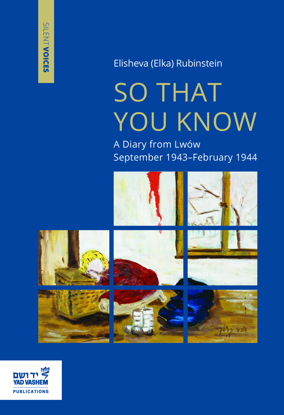
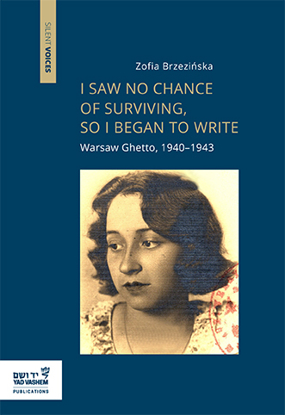
So that You Know: A Diary from Lwów September 1943–February 1944
Elisheva (Elka) Rubinstein